
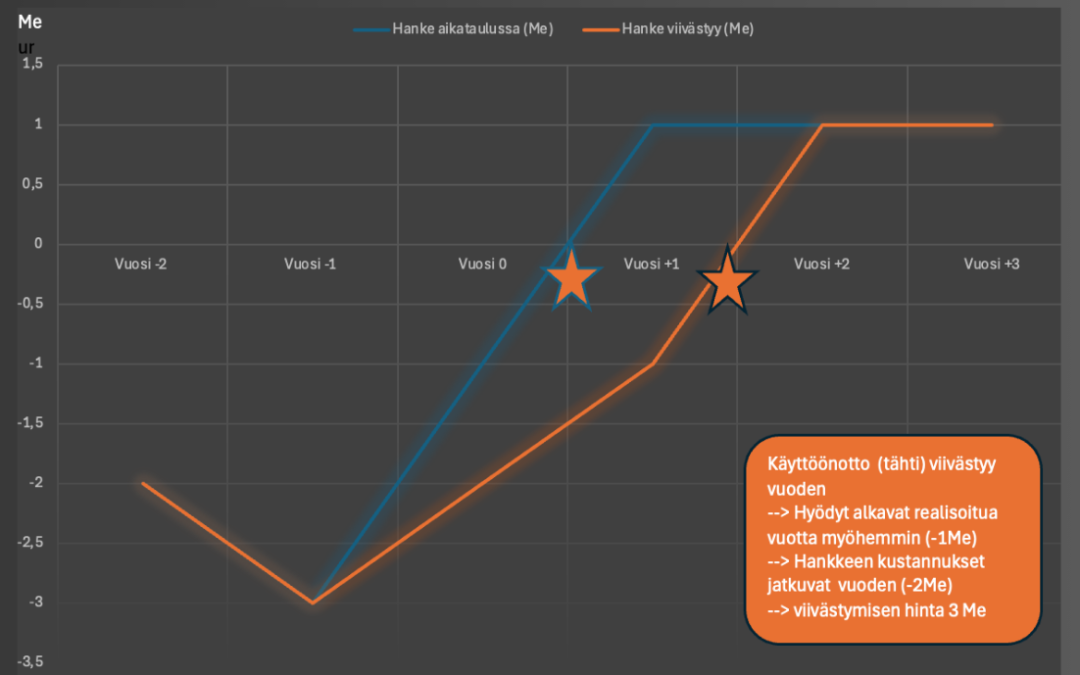
Let’s imagine a €6M ERP project that is delayed by a year. What happens?
👉 The project organization continues for an additional year, creating €2M in extra costs
👉 The benefits start materializing a year later, causing a €1M loss
= 👉 The benefits start materializing a year later, causing a €1M loss.
This is just an example — but unfortunately, a very real one. I've seen this scenario far too many times.
After doing the math, it becomes crystal clear: it’s worth investing heavily to avoid delays.
Hiring a project manager costs money, yes — but that cost is relatively small if it helps keep the project on track.
Even the best project manager can’t promise there won’t be surprises. But they do have the best tools to ensure that:
✅ the project stays on schedule and within budget
✅ the end result meets user needs
✅ people adopt the change and actually start using the new solution
Next time you’re assigning roles in a project, take a moment to think — and calculate — the cost of delay. You might be tempted to minimize external consulting or recruitment needs and show savings on paper. But in practice, those “savings” rarely materialize.
Would you want your heart surgery to be performed by a competent general practitioner instead of a cardiac surgeon? Most wouldn’t. Just like it makes little sense to entrust the beating heart of your organization — your ERP system — to inexperienced hands. Usually, investing in experience pays off.
What other perspectives would you consider in making these decisions?